How to Trade Meme Coins in 2026 With a $450,000 Case Study in Mind
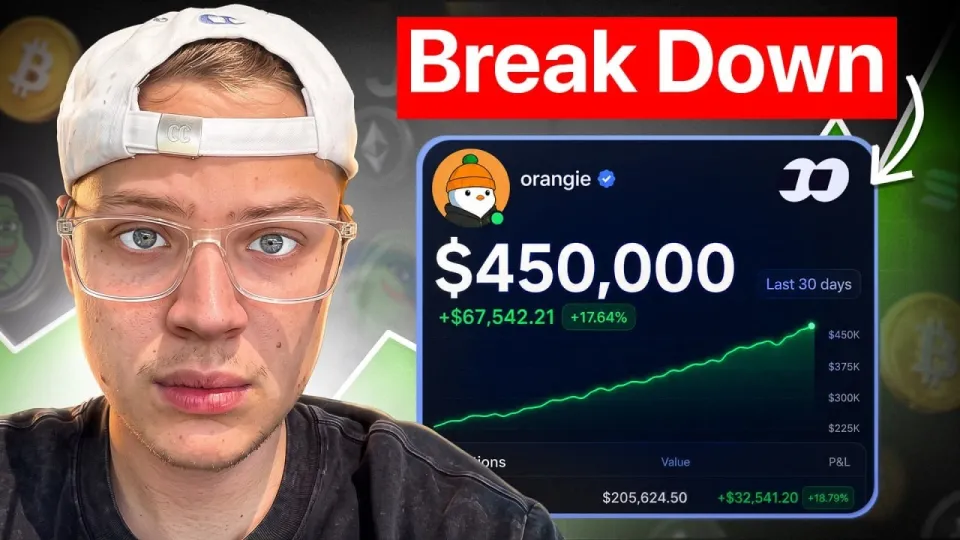
Video: How I Made $450,000 Trading Memecoins in 30 Days
Want articles like this for your own video to promote it on YouTube and Google? Order them through the Telegram bot @sat_sit_bot. It writes articles around your video, embeds the video and publishes them on popular niche websites (no ads). Free trial — 50 articles.
Meme coin trading is the practice of buying and selling tokens whose price is driven almost entirely by narrative, community and attention rather than cash flow. In the video How I Made $450,000 Trading Memecoins in 30 Days, Orangie Web3 walks through the trades behind that result, and the paid group behind his workflow is available through the Kaizen Group checkout on Whop. The headline number is real as a claim, but it is the process — screening, sizing and exiting — that a trader can actually copy.
What a meme coin actually is and why it moves so fast
A meme coin is a token with no product, no revenue and usually no roadmap; its price is a bet on attention. That makes it different from a utility token or a blue-chip crypto asset, where holders can at least argue about network usage or earnings. A meme coin's value comes from the story around it: a ticker, a mascot, a joke, a community that keeps posting.
Because there is nothing to value, price discovery is pure reflexivity. Buyers arrive because the price is going up, and the price goes up because buyers arrive. The lifecycle is short and violent:
- Launch. A token is created on a launchpad, often on Solana, with a bonding curve or an initial liquidity pool.
- Graduation. If enough capital enters, the token "graduates" to a decentralized exchange and gets a real order book of liquidity.
- Expansion. Attention spikes on social platforms, and the market cap multiplies in hours.
- Distribution. Early wallets and snipers sell into the new demand.
- Decay. Volume dries up and the token bleeds back toward zero, usually within days.
The practical consequence: meme coins are a momentum game with a very short half-life. Holding through the decay phase is how most participants lose the gains they made on the way up.
The $450,000 in 30 days claim and what it implies about position sizing
The $450,000 figure in the title is best read as an outcome of asymmetric bets, not of a high win rate. Meme coin trading rarely produces a trader who is right most of the time; it produces traders who keep most positions small and let one or two outliers run.
That arithmetic changes how you should think about a portfolio. If eight of ten positions go to zero and the ninth returns 3x while the tenth returns 40x, the account is up sharply — but only if the losing positions were sized so they could not end the game. A trader who puts 40% of the bankroll into each idea is wiped out by the second failure, no matter how good the third idea is.
A workable structure looks like this:
- Core bankroll: the capital you will not touch and do not trade with.
- Trading bankroll: money you can lose entirely without changing your life.
- Per-trade risk: a fixed small percentage of the trading bankroll, sized so that ten consecutive losses are survivable.
- Scaling: add to a position only after it is already in profit, never to average down a losing meme coin.
The video's framing — that you can lose almost everything and still recover with one hit — is accurate as a description of the payoff distribution, but only for traders who still have capital when the hit arrives.
How meme coin trades are actually executed on Solana
Execution is where most beginners lose money before the thesis even matters. Meme coin trading on Solana runs through wallets, launchpads, aggregators and trading terminals, and each layer adds friction, fees and failure modes.
A typical flow:
- Fund a dedicated wallet. Use a fresh wallet holding only trading capital, separate from anything you care about.
- Connect to a terminal or platform. Tools such as fomo.family bundle charting, quick buys and portfolio tracking; the creator's referral entry point is https://fomo.family/r/orangie.
- Check liquidity and holders before buying. Thin liquidity means your own sell order moves the price against you. A concentrated holder list means one wallet can end the chart.
- Set slippage deliberately. Too low and the transaction fails during volatility; too high and you pay a hidden tax to faster traders.
- Pre-plan the exit. Decide the market cap or multiple at which you sell part of the position, before you are emotionally invested.
Solana's low fees and fast blocks make this style of trading possible, but they also mean competition from bots that see new launches in the same second they appear. A retail trader is not competing on speed; the edge has to come from selection and from knowing when to leave.
Reading the risks that the highlight reel hides
The most important fact about meme coins is that the base rate is brutal. Most launched tokens go to zero, many are outright scams, and the ones that survive are exceptions rather than the norm.
Specific risks worth naming:
- Rug pulls and honeypots. The contract can prevent selling, or the deployer can drain liquidity. Check whether mint and freeze authority are revoked and whether liquidity is locked.
- Sniping and insider supply. Bundled wallets can hold large allocations and dump on retail buyers the moment volume appears.
- Slippage and MEV. Large orders in thin pools get front-run, and the realized price is worse than the chart suggests.
- Liquidity illusion. A high market cap on low liquidity is not money you can withdraw; the price collapses as you sell.
- Survivorship bias in content. A creator showing a $450,000 month is showing the outcome, not the full distribution of attempts behind it.
A related point comes up repeatedly in the audience: some viewers suspect that top traders coordinate in private groups, calling coins together and sniping alongside each other. Whether or not that is true for any specific group, the structural lesson holds — information asymmetry and speed are real edges, and a solo trader should assume they are the slower participant in the room.
Common questions from new meme coin traders
New traders tend to ask the same handful of things, and the answers are mostly about expectations rather than tactics. Many arrive after losing most of a small first deposit, then recover part of it on a single lucky trade; others ask for slower explanations and for trade breakdowns showing entry, exit and reasoning.
The honest answers:
- Can you start with $100? Yes, and it is a reasonable tuition fee. Treat it as the cost of learning execution, not as a path to a large account.
- Do you need to watch charts all day? For short-horizon meme trading, yes — the window between entry and distribution is often hours, not weeks.
- Is a 3x on one coin proof of a strategy? No. One trade is a sample of one; a strategy is what survives twenty trades.
- Should you copy calls from a group? Copying without understanding the exit means you inherit the downside and none of the discipline. Use calls as a watchlist, not as instructions.
A useful exercise is to log every trade with entry, exit, thesis and outcome. After thirty entries the pattern in your own data — not in someone else's video — becomes the strategy.
Useful links
- Kaizen Group access and checkout: https://whop.com/checkout/plan_GTFkEFh0JFpU8?a=orangie
- fomo trading platform referral: https://fomo.family/r/orangie
- Discord community: https://discord.gg/memecoins
- Instagram: https://www.instagram.com/orangieyt/
The realistic takeaway from a $450,000 meme coin month
Meme coin trading can produce extraordinary returns because the payoff distribution is extremely skewed, and the $450,000 in 30 days reported by Orangie Web3 is a genuine example of that tail. It is not a repeatable monthly expectation, and anyone who treats it as one will size positions as if losses were impossible. The transferable skills are unglamorous: a separate trading wallet, fixed small risk per idea, pre-committed exits, and a refusal to average down into a dying chart. Watch the breakdown on the Orangie Web3 channel for the trade-by-trade reasoning, and if you want the creator's paid workflow, start at the Kaizen Group checkout — but only with capital you can afford to lose entirely.
Key takeaways
- Orangie Web3 reports turning a small starting bankroll into $450,000 trading meme coins over 30 days.
- Meme coins are narrative-driven tokens, mostly launched on Solana launchpads, with no cash flow or fundamentals.
- Most meme coin traders lose money; a single winner can offset many losing positions, so sizing matters more than win rate.
- Trading happens on platforms like fomo.family, where the creator's referral link is fomo.family/r/orangie.
- The creator's paid community is accessed through the Whop checkout link plan_GTFkEFh0JFpU8.
Source: How I Made $450,000 Trading Memecoins in 30 Days · Markdown version
Questions & answers
How much money do you need to start trading meme coins?
You can start with as little as $100, which is enough to learn wallet setup, slippage, fees and exits without risking meaningful capital. The goal of a first deposit is education, not income; size up only after you have a logged track record of your own trades.
Is the $450,000 in 30 days result realistic to repeat?
No, not as a monthly expectation. Meme coin returns are driven by a small number of extreme winners, so results are lumpy and most tokens go to zero. The repeatable part is risk control — small fixed position sizes and pre-planned exits — not the headline number.
Why do some traders seem to buy coins before everyone else?
Speed and information asymmetry are real edges: bots monitor new launches instantly, and private groups can share calls before the public sees them. A retail trader should assume they are slower and compete on selection and discipline rather than on reaction time.
What is the biggest mistake beginners make with meme coins?
Oversizing positions and holding through the distribution phase. Putting a large share of the bankroll into one idea means a single failure ends the account, and staying in after volume dries up turns a winning trade into a loss.